Forms existed, but rarely got used
Customers relied on generic documents, email replies, and incomplete notes because the experience was not part of their hiring workflow.
 Aritro
Case study / Eightfold AI
Turning scattered interview notes into structured evidence for better hiring decisions.
Company
Eightfold AIRole
UX / UI DesignDuration
6 months / 2022Scope
Talent acquisition01 / The opportunity
Hiring decisions depended on interview feedback, but that feedback lived in email threads, spreadsheets, recruiter notes, and disconnected forms. Teams could not consistently request it, collect it, compare it, or act on it.
I designed an end-to-end feedback system for Eightfold Talent Acquisition: a connected experience spanning form creation, feedback requests, feedback completion, candidate review, and team-level follow-up.
02 / Research
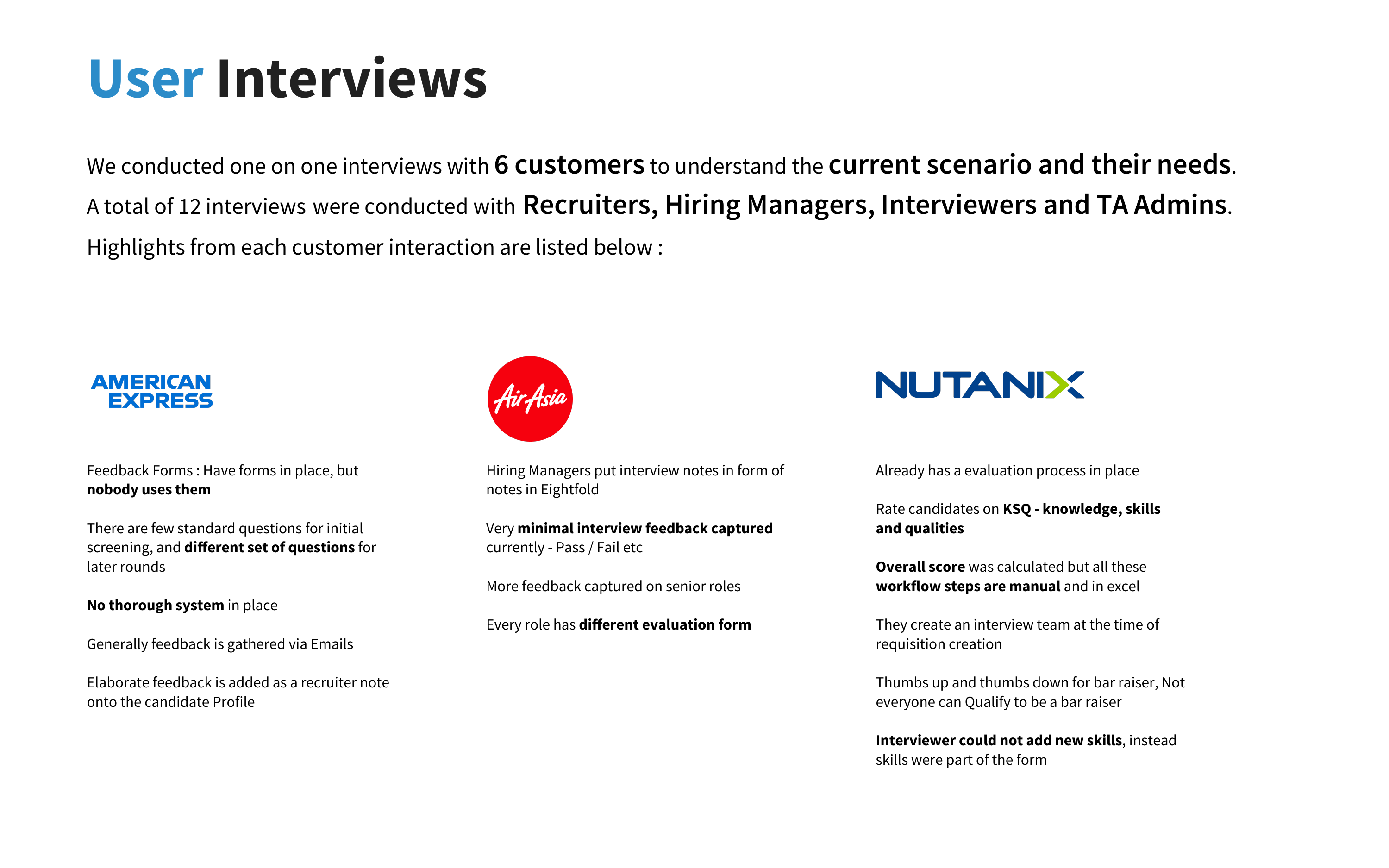
We conducted 12 one-to-one customer interviews across six organisations with recruiters, hiring managers, interviewers, and TA administrators.
Customers relied on generic documents, email replies, and incomplete notes because the experience was not part of their hiring workflow.
Teams evaluated knowledge, skills, qualities, and role-specific competencies differently, yet the existing product offered one limited form.
Recruiters had no central way to see what was pending or follow up, creating slow decisions and the risk of losing strong candidates.
Research evidence
Customer interviews revealed an inconsistent, largely manual feedback process—alongside a clear need for role-specific forms, reliable reminders, and a consolidated view of feedback.
03 / People in the system
Recruiter
Interviewer
Hiring manager
TA admin
04 / Experience strategy
The solution could not be a standalone form. It had to support the whole feedback lifecycle and meet each role where their work already happened.
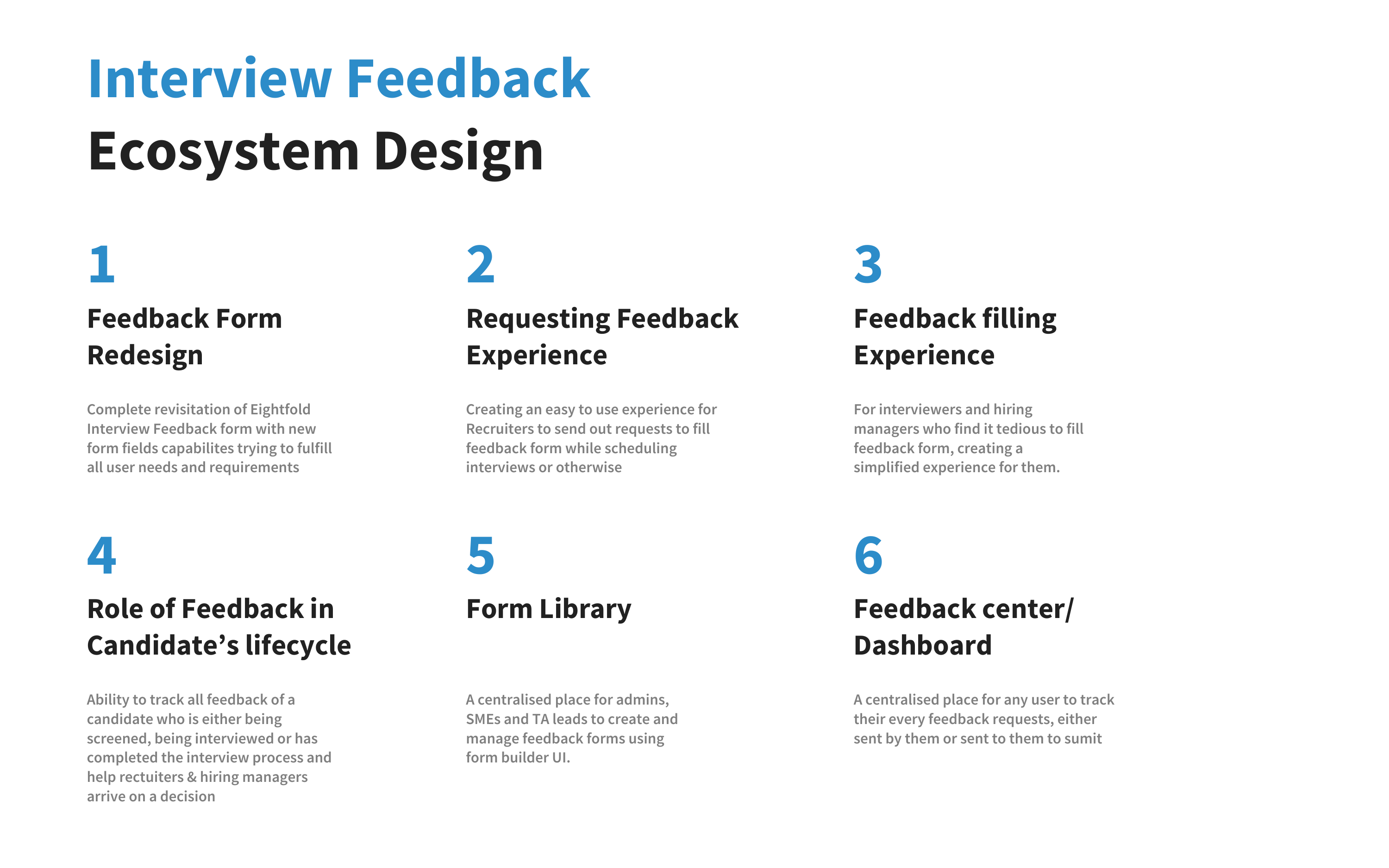
Ecosystem blueprint
The ecosystem connected creation, requesting, completion, review, and follow-through—so feedback became part of the hiring workflow rather than an isolated administrative task.
05 / The system
A redesigned form supported ratings, multi-select responses, skill assessment, attachments, and open comments. A form library and question bank let teams create, reuse, edit, and duplicate forms for roles, business units, and interview stages.
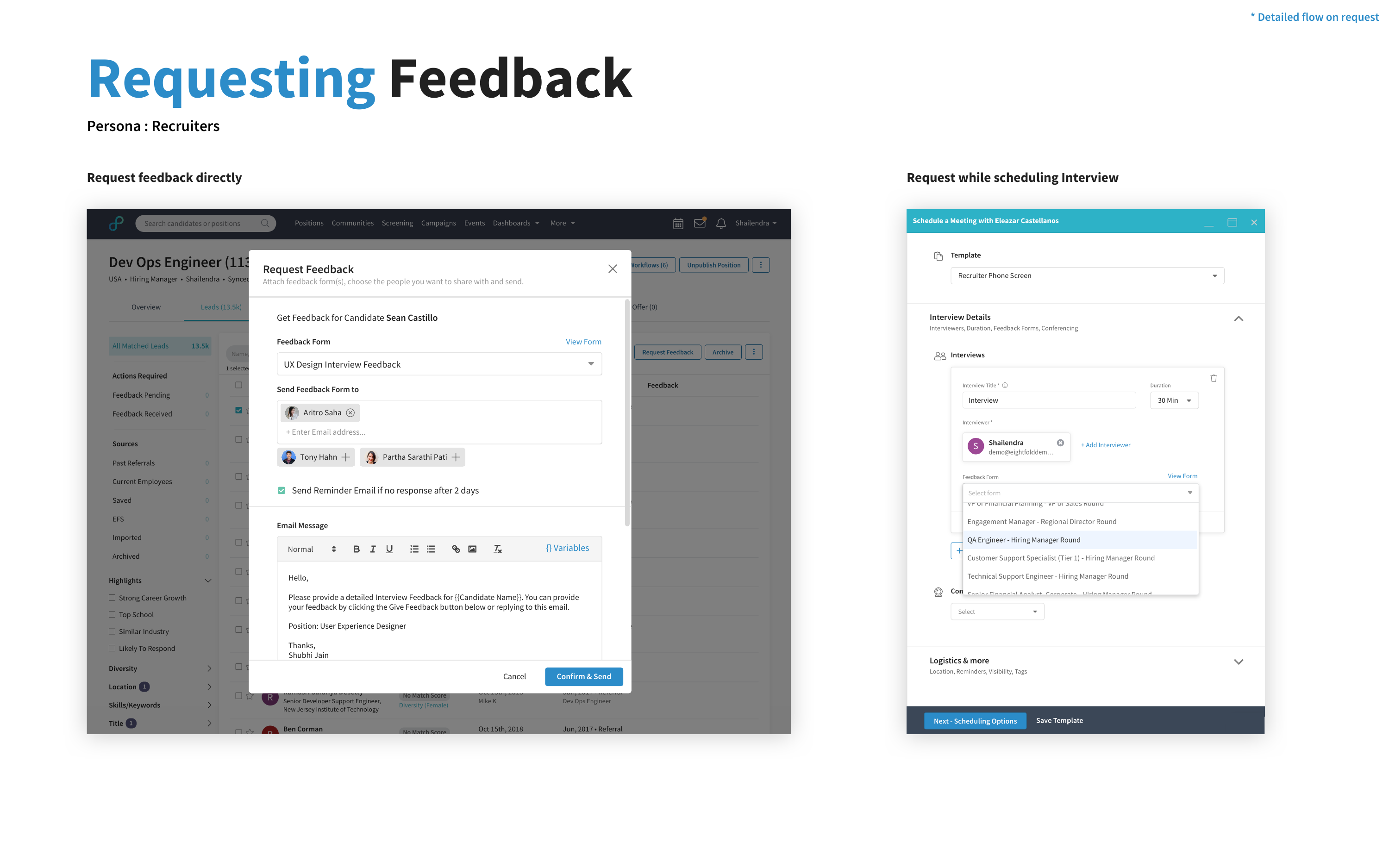
Recruiters could attach forms while scheduling or request feedback directly, choose recipients, send reminders, and connect each request to the right candidate and stage.
Interviewers could complete feedback alongside a candidate profile summary and resume, add newly assessed skills, and move between requests without reopening scattered links.
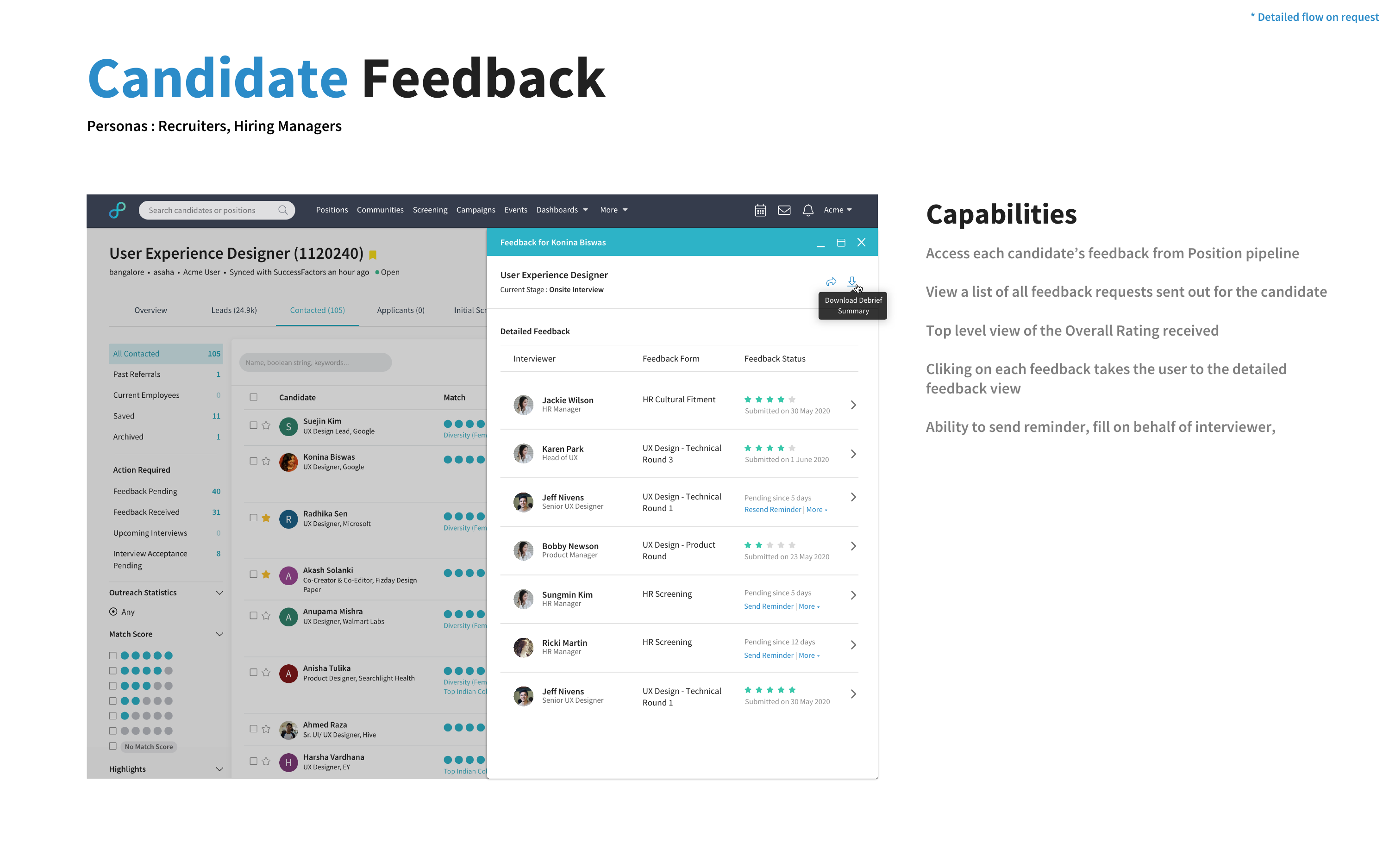
Candidate feedback brought submitted and outstanding requests together in the hiring pipeline, including ratings, detailed evidence, reminder actions, and a debrief summary.
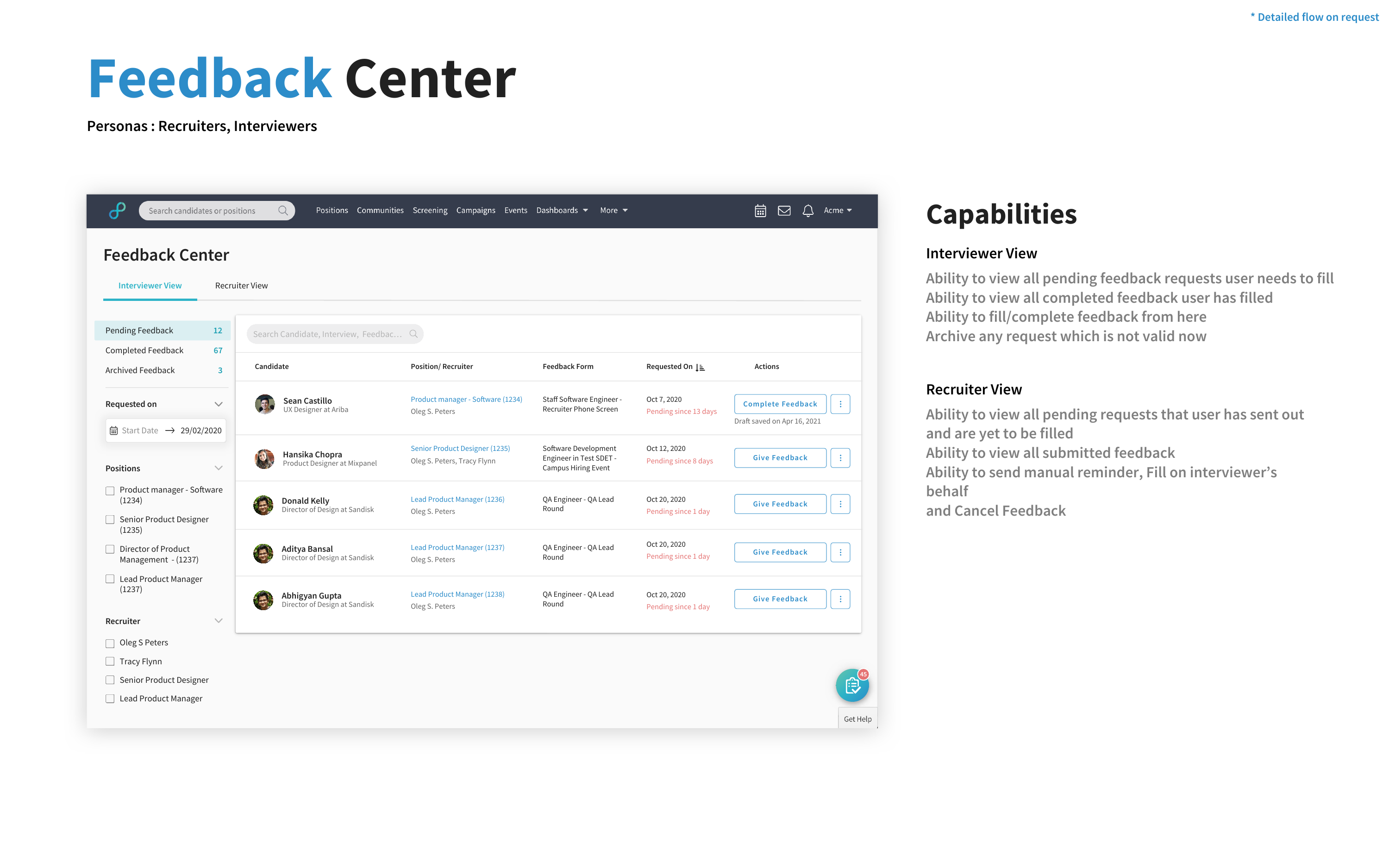
Separate recruiter and interviewer views made pending, completed, archived, and sent requests easy to manage—replacing a fragmented email-based process.
Each workflow made the next action clear: provide feedback, remind an interviewer, review a candidate, or improve the form. The product reduced coordination work without hiding the human judgment behind it.
Workflow evidence
Feedback could be requested within interview scheduling or independently. Recruiters saw the request status at candidate level, while interviewers could act directly from a focused feedback workspace.
06 / Validation
Customer reviews validated that the system covered the breadth of the hiring workflow. The next iteration focused on refinements customers asked for: pre-linking forms to positions, skill suggestions based on calibration, automated reminders, completion analytics, candidate comparison for debriefs, and workflow automation based on feedback.
“Loved the flow. It covers all aspects of our hiring workflow.” — Recruiter feedback from customer validation
Launch evidence
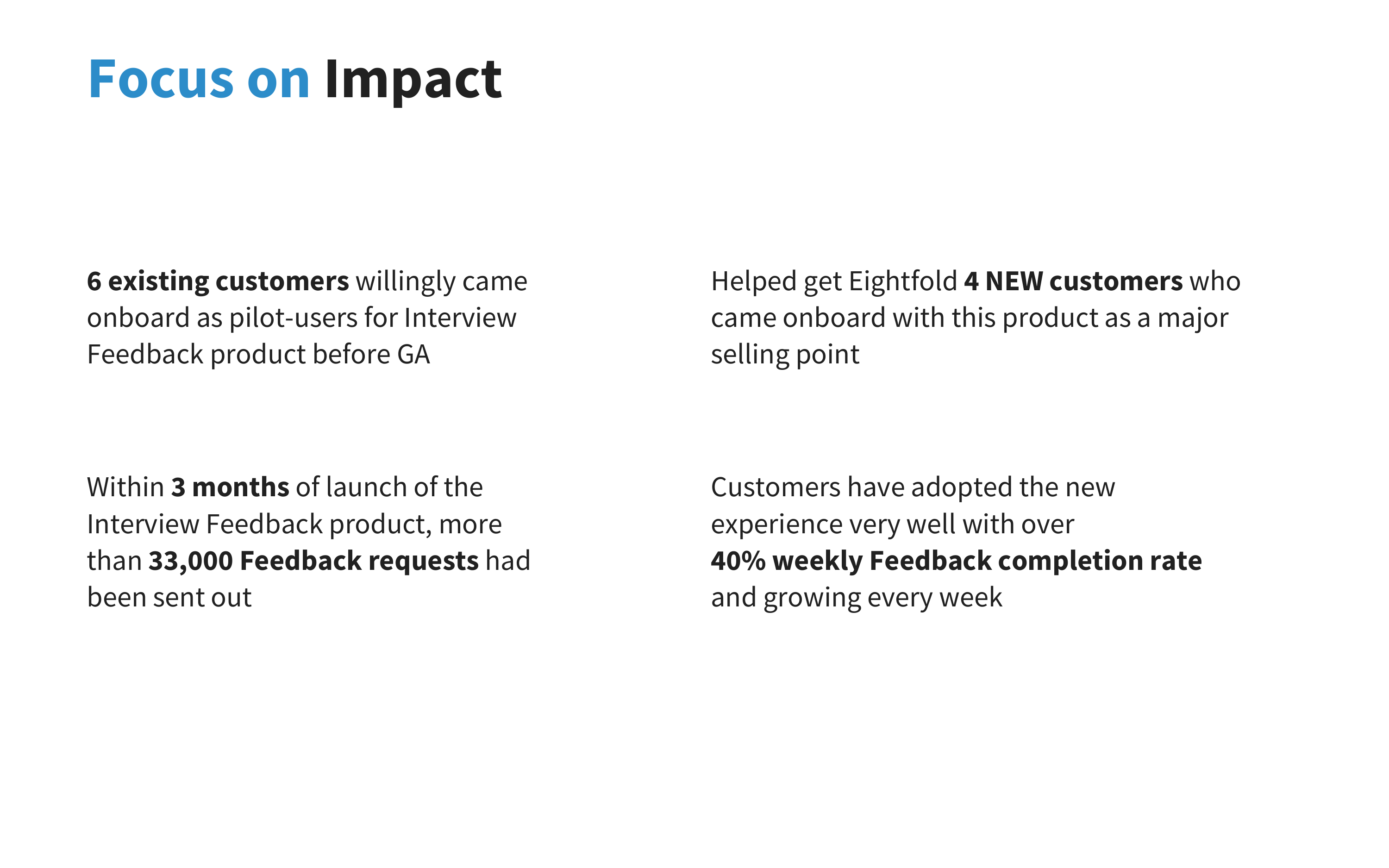
The early product signal was clear: existing customers volunteered as pilot users, feedback requests scaled quickly after launch, and the capability became a differentiator in new customer conversations.
07 / Impact
Metrics below reflect the first three months after launch.
existing customers joined as pilot users before general availability.
feedback requests sent in the first three months after launch.
weekly feedback completion rate, with adoption growing week by week.
new customers cited the product as a major reason for coming onboard.
My contribution
I owned the UX and UI design across research, workflow definition, user flows, wireframes, validation, and final product design. I worked closely with product and engineering to turn a missing capability into a coherent feedback ecosystem for recruiters, interviewers, hiring managers, and TA administrators.
Next project
AI Interviewer ↗